

Lessons for building a digital repository of archival material, stories, or user-generated knowledge.
Digital archives play an increasingly important role in preserving cultural knowledge, personal histories, and community memory. But not all archives are created equal. Beyond simply storing information, the most effective digital archives are designed to be welcoming, respectful, and alive — spaces that invite exploration while honouring the people and knowledge they represent.
At Evolving Web, we recently collaborated with the University of Denver on the Our Stories, Our Medicine Archive (OSOMA), a community-owned digital archive that centres traditional Indigenous knowledge related to health, wellness, culture, and identity. Built in close collaboration with community partners, OSOMA offers a powerful example of how digital repositories can move beyond institutional models toward something more participatory and human.
If you’re working on a digital archive — whether it’s focused on cultural heritage, community storytelling, or user-generated knowledge — here are some key lessons from OSOMA that can help guide your approach.
Design for discoverability, not just storage
A strong digital archive doesn’t assume users know exactly what they’re looking for. Instead, it supports exploration and discovery.
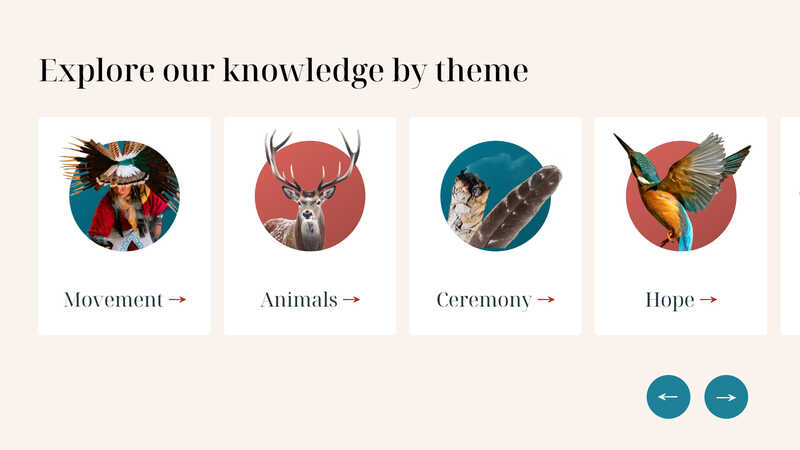
On OSOMA, visitors can browse content by broad themes such as Plants, Food, Ceremony, Identity, and Land. From there, they can narrow their focus using more specific filters, for example, exploring knowledge connected to particular healing practices or types of medicine.
This structure allows users to move easily between big ideas and specific stories. Someone might begin by browsing “Plant Medicine” and then discover individual narratives, videos, or related knowledge shared by community members. The archive encourages curiosity rather than forcing users into rigid pathways.
By organizing content around themes that reflect Indigenous worldviews, rather than academic or institutional categories. OSOMA makes it easier for users to find meaning, not just information.
Use plain language to build trust
Plain language plays an important role in making digital archives accessible, but it also shapes how users feel when they engage with the content.
Across OSOMA, headlines, descriptions, and navigation labels are written in clear, approachable language. The content doesn’t feel instructional or authoritative, and it avoids positioning itself as a definitive source of medical advice. Instead, it presents stories, experiences, and teachings in a way that feels open-ended and respectful.
This tone is especially important for an archive focused on health and wellness. By avoiding prescriptive language, OSOMA creates space for users to learn without pressure, and reinforces that the knowledge being shared belongs to the community, not the platform.
Make it easy to access knowledge quickly
OSOMA includes rich media such as videos and interviews, and the way users access that content is intentional.
For example, users can watch videos directly from search and results pages, without needing to click through multiple screens. This makes it easier to sample content, follow related threads, and continue exploring without losing context.
These small experience details matter. They reduce friction and make the archive feel responsive and intuitive, especially for users who may be less comfortable navigating complex digital interfaces.
Focus on personal stories over institutions
Many digital archives unintentionally feel institutional, even when they contain deeply personal material. OSOMA takes a different approach by placing individual voices front and centre.
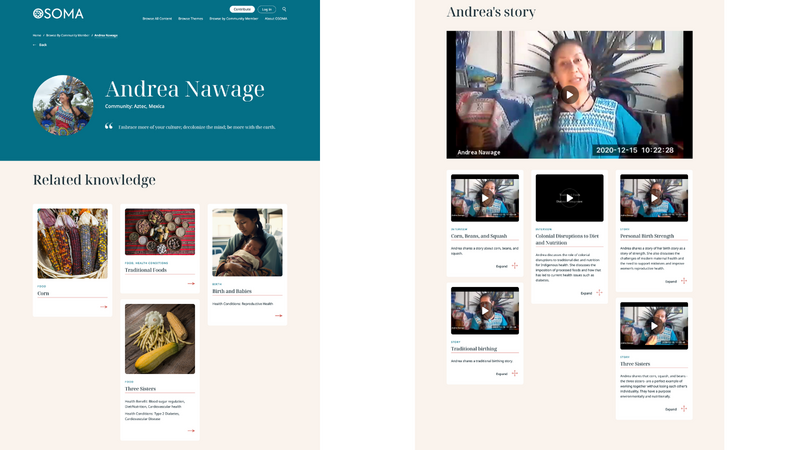
Each community member has a dedicated profile page that brings together their stories, interviews, and related knowledge items. These profiles help users understand who is sharing the knowledge, where it comes from, and how it connects to lived experience.
Stories aren’t treated as supplementary content, they are the foundation of the archive. This storytelling-first approach reflects Indigenous knowledge traditions, where stories are a primary way of sharing history, values, and healing practices. The result is an archive that feels human and relational, rather than abstract or academic.
Make participation visible and welcoming
OSOMA was designed as a living, community-owned archive, and that intention is visible throughout the site.
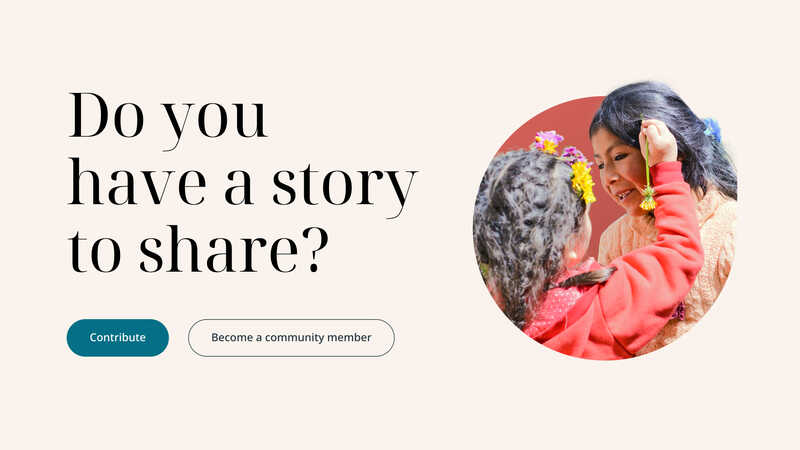
Links and prompts to contribute are displayed prominently, making it clear that community members are invited to share their own stories and knowledge. Even visitors who never log in or submit content can immediately sense that OSOMA is shaped by ongoing participation.
Behind the scenes, the platform supports this model by allowing Indigenous users to log in, contribute content, and access protected cultural knowledge. Using Drupal’s Group functionality, the site ensures that sensitive information remains visible only to appropriate community members.
Participation isn’t treated as an add-on but rather it’s built into the structure of the archive itself.
Use design to support confidence and cohesion
Strong visual design helps establish trust, especially when an archive contains many voices and content types.
OSOMA uses photography and video of people, land, and cultural assets to ground the experience in real places and lived relationships. Circular image frames and a consistent colour palette draw from OSOMA’s visual identity and help tie together diverse content.
These design choices do important work quietly. They lend confidence to the stories being shared and ensure the site feels cohesive, even as new contributions are added over time. Rather than competing with the content, the design supports it, creating space for stories to speak for themselves.
Accessibility is foundational, not optional
OSOMA was built to be welcoming to a wide range of users, including Elders, youth, and non-specialist visitors.
The site meets WCAG AA accessibility standards, with clear layouts, strong colour contrast, and plain-language content. Navigation and browsing tools were designed to be intuitive, so users can explore without needing technical expertise.
Accessibility here isn’t treated as a compliance exercise. It’s part of a broader commitment to inclusion, respect, and ease of use: values that align closely with OSOMA’s community-led goals.
Building archives that honour living knowledge
OSOMA demonstrates that digital archives don’t have to replicate colonial or extractive models of knowledge storage. With the right approach, they can become spaces of connection, care, and continuity.
By prioritizing discoverability, plain language, personal storytelling, participation, strong design, and accessibility, OSOMA offers a powerful example of what’s possible when technology is shaped by community values.
If you’re thinking about building a digital archive or knowledge platform, this project is a reminder to look beyond the technical requirements and ask deeper questions about ownership, voice, and experience.
Get in touch to talk about building digital platforms that are inclusive, future-friendly, and people-first.
Learn more about the OSOMA project by reading the case study.

